
Commercial Plumbing Services in Lacey, WA
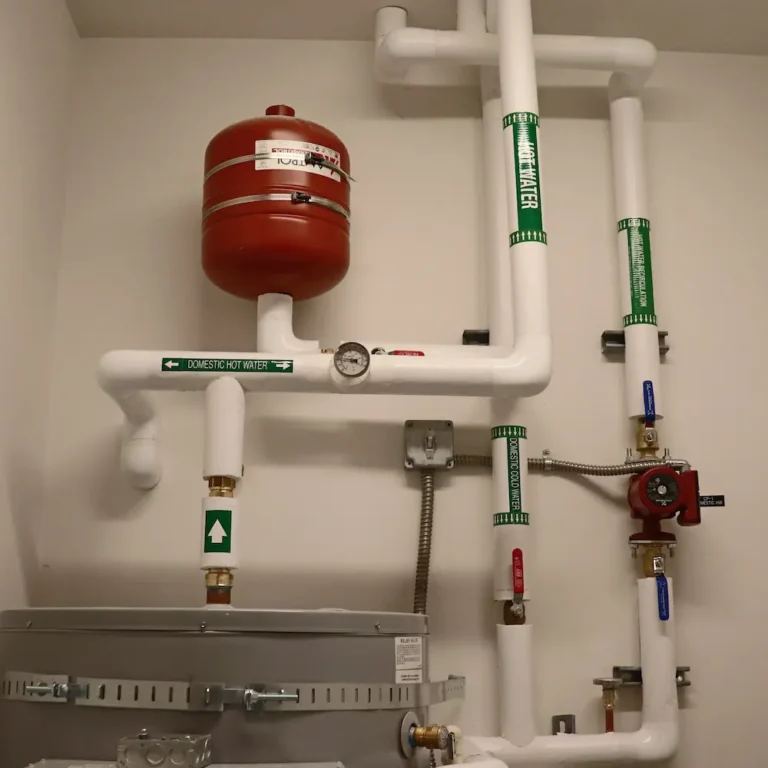
Washington state restructured its plumbing contractor licensing in 2021 in a way that a significant portion of the commercial construction market hasn’t fully absorbed. As of July 1, 2021, the ‘specialty plumbing’ registration that previously allowed general contractors to perform plumbing work was eliminated. Under Chapter 18.106 RCW, all plumbing contract work now requires a Licensed Plumbing Contractor with a designated journey-level or specialty plumber on staff. A general contractor registration alone does not authorize plumbing work. Elite Mechanical Services holds Plumbing Contractor License ELITEMS761BC — the license that Washington state requires for commercial plumbing work — and performs commercial plumbing for new construction, tenant improvements, building renovations, and ongoing maintenance across Lacey, Olympia, Tumwater, and Western Washington.
Our commercial plumbing scope covers the full range of systems found in commercial and institutional buildings: potable water supply and distribution, including hot water recirculation loop balancing and testing, drain waste and vent systems, backflow prevention assembly installation and annual testing, grease interceptor installation and compliance, commercial water heater installation including Intellihot commercial tankless systems under our IntelliPRO certification, gas piping, and hydronic piping for heating systems.
Every plumbing permit is pulled through the local Authority Having Jurisdiction. Every backflow preventer test is performed by a Washington State Department of Health certified Backflow Assembly Tester (BAT). All work is performed by journey-level plumbers under GC License ELITEMS796R2, Electrical License ELITEMS787CH, and Plumbing License ELITEMS761BC — one contractor, three license types, zero subcontracting gaps.
Contact Elite Mechanical Services at (360) 489-0717
Commercial Mechanical Contractor | Lacey, WA | Founded 2021
The Commercial Plumbing Standard Elite Holds
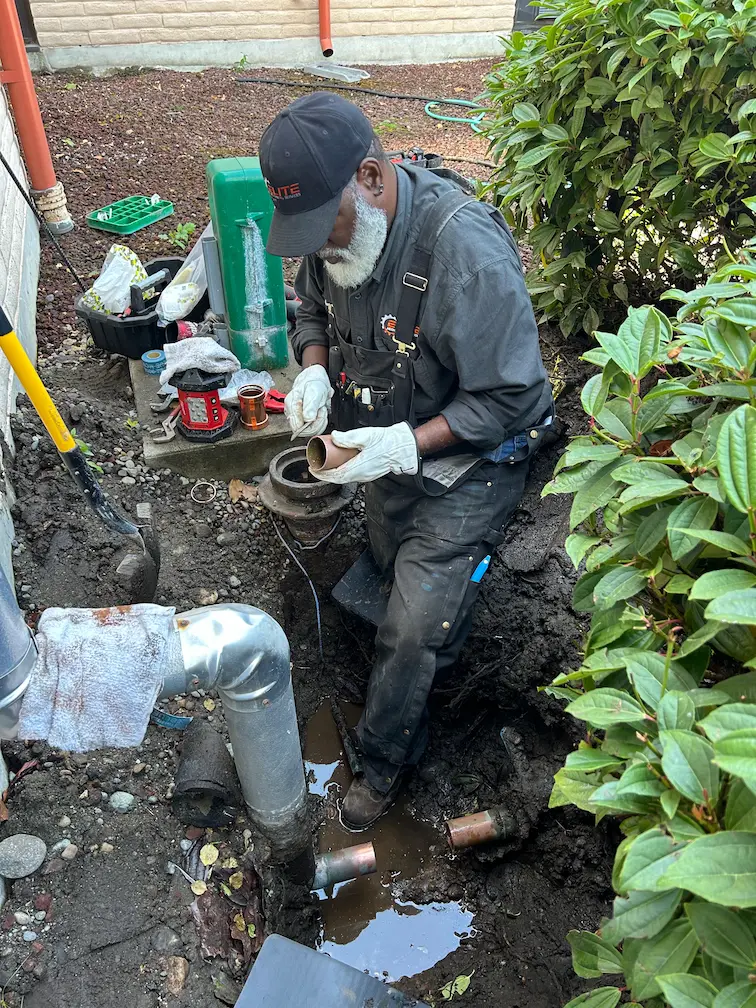
Licensed Plumbing Contractor. Journey-level plumbers. Permitted work. Annual backflow compliance.
The commercial plumbing market in Western Washington has a persistent issue with unlicensed work that became more visible after the 2021 licensing change. Before July 2021, general contractors could perform plumbing work under a specialty plumbing registration. That registration no longer exists. Facilities that received plumbing work performed by a GC-only contractor after July 1, 2021 — tenant improvement rough-in, fixture replacement, pipe repairs — may have work on the books that wasn't performed by a licensed plumbing contractor. Unpermitted plumbing work creates the same liability structure as unpermitted boiler work: it shows up in property transactions, insurance claims, and building inspections at the worst possible time. Verifying that your plumbing contractor holds License ELITEMS761BC under Chapter 18.106 RCW is the single check that confirms the work is being done legally.
Every Elite plumbing project is performed under Plumbing License ELITEMS761BC by journey-level plumbers, pulled through the local AHJ, and inspected before walls close.
Elite's Plumbing Contractor License ELITEMS761BC designates a journey-level plumber who has completed the 8,000 hours of supervised experience — at least 4,000 in commercial or industrial plumbing — required for commercial plumbing work under Washington state's certification structure. This isn't a residential specialty license or a general contractor registration with a plumbing add-on. It's the credential that authorizes the full scope of commercial plumbing work including water supply systems, drain-waste-vent systems, backflow prevention assemblies, grease interceptors, gas piping, and commercial water heater installations. Combined with our GC License ELITEMS796R2 and Electrical License ELITEMS787CH, Elite holds every license needed to manage a commercial plumbing project from permit to final inspection without a separate subcontractor for any part of the scope.
Commercial plumbing contracts in the public sector — new construction at tribal facilities, school district plumbing renovations, government building upgrades, and publicly funded tenant improvement projects — frequently carry supplier diversity scoring requirements. Elite's MWBE (Cert #M1F0027854), DBE (Cert #D1F0027854), and PWSBE (Cert #P000027854) certifications qualify Elite for those procurement processes. As an Indigenous-owned (Cowlitz Tribe), minority-owned, and woman-owned contractor, Elite is particularly well-positioned for tribal facility plumbing projects and the public contracting frameworks that govern tribal enterprise construction across Western Washington.
We provide commercial plumbing services for restaurants and commercial kitchens requiring grease interceptor compliance, healthcare facilities with medical gas piping requirements, schools and government buildings, tribal facilities, hotels and multi-unit residential buildings, office buildings and corporate campuses, light industrial facilities, and retail build-outs across Thurston, Pierce, Lewis, Cowlitz, Mason, and Grays Harbor Counties.
Commercial Plumbing Within Your Complete Mechanical Scope
Commercial plumbing doesn’t exist independently of the rest of a building’s mechanical systems. The domestic water supply connects to commercial water heaters, which connect to recirculation loops, which run alongside hydronic heating piping. The gas supply feeds both the water heater and the boiler. Grease interceptors tie into the drain system that also handles HVAC condensate. When the contractor managing all of these systems is the same contractor, the coordination problems that arise when separate trades share a mechanical room disappear. Elite holds the plumbing, general contractor, and electrical licenses to manage the full scope — and the boiler and water heating credentials to handle what’s connected to the plumbing.
What Commercial Plumbing Work Requires in Washington State
Commercial plumbing in Washington state is governed by WAC 51-56, which adopts the Uniform Plumbing Code (UPC) published by IAPMO with Washington-specific amendments. All plumbing contract work must be performed by a Licensed Plumbing Contractor under Chapter 18.106 RCW, with a designated journey-level or specialty plumber on staff. Permits are issued by the local Authority Having Jurisdiction — city or county building departments — not by the state. Work that alters drain, waste, vent, or supply piping typically requires a permit. Inspection before concealment is required on permitted work.
The July 1, 2021 elimination of the specialty plumbing registration created a meaningful compliance gap in the commercial construction market. General contractors who had been performing plumbing work under the old registration structure were required to obtain a Licensed Plumbing Contractor license or stop performing plumbing work. Not all of them made that transition cleanly. Building owners who have had commercial plumbing work performed since July 2021 should verify that their contractor held a valid Plumbing Contractor License at the time of the work — not just a GC registration. The practical consequence of unpermitted or unlicensed plumbing work is the same as it is for any unpermitted mechanical installation: it creates liability that materializes at the worst possible time.
Washington state’s cross-connection control program under WAC 246-290-490 requires that backflow prevention assemblies protecting the public water supply be tested at installation, after any repair or relocation, and at least annually by a Washington State Department of Health certified Backflow Assembly Tester (BAT). Test reports must be submitted to the local water purveyor. Non-compliance can result in water service shutoff. Commercial properties — particularly those with irrigation systems, fire suppression connections, boiler system connections to the potable water supply, commercial food service operations, and healthcare facilities — are among the highest-priority compliance targets for local water purveyors. Full details on Washington state’s cross-connection control requirements are available from the Washington State Department of Health at doh.wa.gov.
Your facility needs commercial plumbing services if any of the following apply: you have backflow prevention assemblies that have not been tested in the past 12 months; you are planning a tenant improvement, renovation, or addition that involves altering existing supply or drainage piping; your grease interceptor has not been inspected or serviced to local sewer authority requirements; your commercial water heaters are more than 10 years old and have not been evaluated for capacity adequacy relative to your current demand; or you have a plumbing system that was modified by a general contractor after July 1, 2021, and you are not certain whether a licensed plumbing contractor performed the work.

Our Commercial Plumbing Project Process
Commercial plumbing projects — whether new construction rough-in, tenant improvement, or system repair — follow a consistent process. The scope and timeline differ; the standards don’t. Here’s how Elite approaches a commercial plumbing project from assessment through permit closeout:

Site assessment and system evaluation
We visit the facility and assess the existing plumbing infrastructure — pipe material, size, condition, fixture layout, water supply pressure, drain configuration, and the location of existing backflow prevention assemblies. For new construction or tenant improvement projects, we review the architectural and mechanical drawings to identify the plumbing scope. For repair and replacement projects, we document the existing conditions before specifying what the work requires.

Scope definition and permit application
We define the full plumbing scope and submit permit applications to the local AHJ before work begins. In Thurston County, Pierce County, and Lewis County — the primary jurisdictions in our service area — permit requirements vary by project type and may include plan review for larger commercial projects. We prepare the required submittal documentation, coordinate with the AHJ on review timelines, and schedule work to begin after permit issuance. No plumbing work proceeds on a permitted project before the permit is in hand.

Rough-in installation
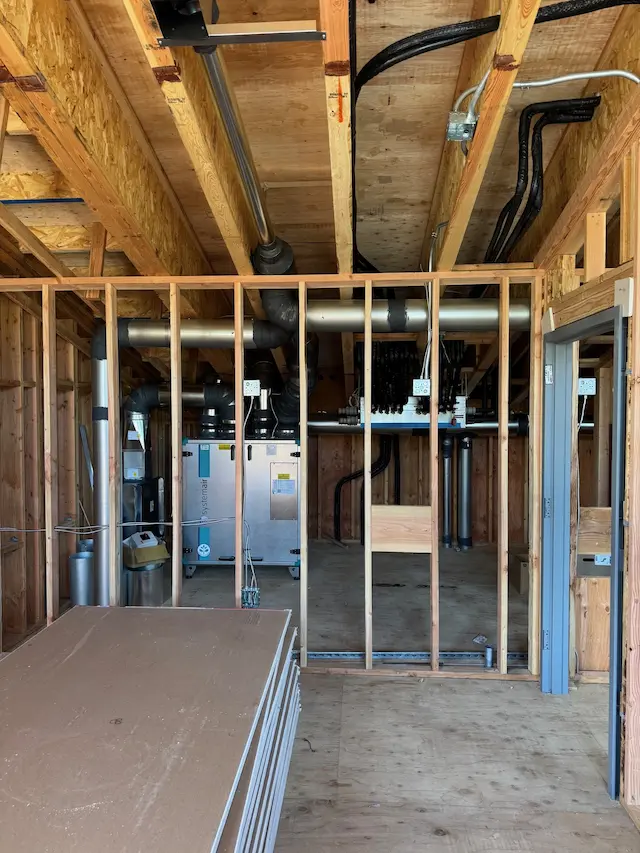
Our journey-level plumbers perform the rough-in scope — supply piping, drain-waste-vent piping, fixture rough-ins, and any specialty piping including gas lines or medical gas piping where applicable. Pipe sizing follows the UPC requirements in WAC 51-56 and is calculated based on the fixture unit load for the system. Drain and vent systems are sloped, supported, and configured per code. All work is accessible for the rough-in inspection before any concealment.

Rough-in inspection
We schedule the rough-in inspection with the local AHJ building inspector before any walls, ceilings, or floor assemblies are closed. The inspector verifies pipe sizing, support, slope, vent configuration, and penetration sealing. We address any inspection comments before requesting approval to close. This is a required step on any permitted plumbing project — not optional and not something we defer in the interest of schedule.

Trim-out, fixture set, and backflow testing
After concealment and finish work is complete, we return for trim-out — setting fixtures, connecting supply and drain connections, installing shut-off valves and escutcheons, and commissioning domestic water heaters. For projects that include backflow prevention assemblies, we coordinate with a Washington State DOH-certified Backflow Assembly Tester (BAT) to perform and document the initial test, and submit the test report to the local water purveyor as required by WAC 246-290-490.

Final inspection and documentation
We schedule the final plumbing inspection with the local AHJ and address any comments before permit closeout. On project completion, we provide the building owner with documentation: as-built drawings reflecting any field changes, equipment submittals for installed water heaters and backflow assemblies, the initial backflow test report, and any product warranties. For projects involving grease interceptors, we provide the installation documentation required by the local sewer authority's FOG (fats, oils, and grease) program.
Commercial Mechanical Contractor | Lacey, WA | Founded 2021
Commercial Plumbing Services We Provide
Commercial plumbing encompasses a broader scope than most building owners realize until a project reveals what’s actually involved. Here’s what Elite covers across the range of commercial plumbing work in Western Washington:
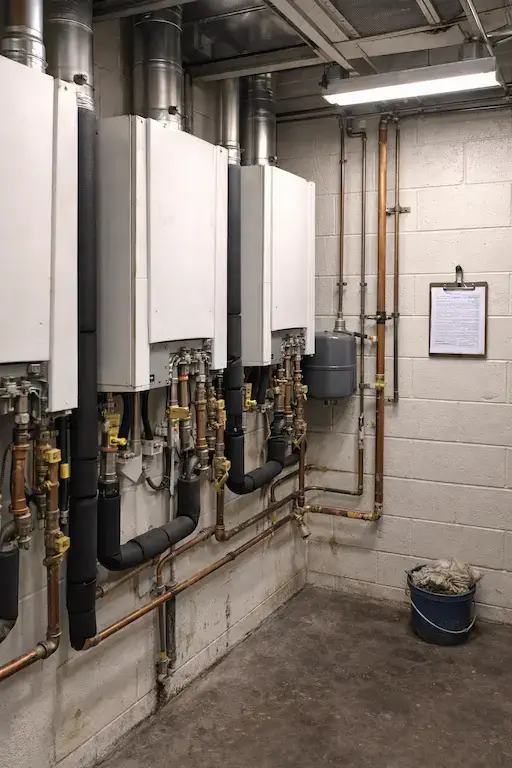
Water Supply and Distribution Systems
Commercial water supply systems handle significantly higher flow rates than residential systems and serve multiple simultaneous demands — restrooms, kitchen equipment, mechanical room connections, and irrigation systems all pulling from the same supply main. Pipe sizing for commercial systems follows the fixture unit method in the UPC, calculating the probable simultaneous demand across all connected fixtures to size the distribution system correctly. Undersized supply piping creates pressure problems that are expensive to correct after walls close. Elite installs, repairs, and replaces commercial water supply and distribution systems including main service lines, distribution mains, branch piping to fixtures, shut-off valve assemblies, pressure reducing valves (PRVs) where supply pressure requires regulation, and hose bibs and utility connections. For buildings with aging galvanized or original copper supply piping showing corrosion or scale buildup, we provide assessment and repiping services to bring the distribution system into compliance with current materials standards.
Drain, Waste, and Vent Systems
Commercial drain, waste, and vent (DWV) systems carry significantly more volume and handle waste streams that residential systems don't encounter — commercial kitchen waste with grease loading, healthcare facility waste with specific handling requirements, and high-volume restroom fixtures serving dense commercial occupancies. DWV system failures in commercial buildings — blocked drains, failed vent stacks, corroded cast iron mains — create immediate operational disruptions and can generate health and code compliance issues quickly. Elite provides commercial DWV repair, replacement, and new installation including sanitary drain systems, floor drains and trench drains for commercial kitchen and mechanical room applications, vent stack repair and replacement, and sewer lateral connections from the building to the municipal sewer. For drain cleaning and hydro jetting to clear blockages in existing DWV systems, see our Drain Cleaning and Hydro Jetting services page.
Backflow Prevention Assembly Installation and Annual Testing
Commercial properties are among the highest-priority facilities for backflow preventer compliance under Washington state's cross-connection control program. The degree of hazard determines the assembly type required — reduced pressure principle backflow assemblies (RPBA) for high-hazard connections such as boiler system makeup water, commercial irrigation with chemical injection, and healthcare facility connections; double check valve assemblies (DCVA) for lower-hazard applications such as fire suppression systems and standard irrigation. Elite installs backflow prevention assemblies correctly sized for the degree of hazard at each connection point, and coordinates DOH-certified Backflow Assembly Tester (BAT) testing at installation. We also provide annual backflow testing programs for commercial clients — scheduling the required annual test, generating the test report, and submitting it to the local water purveyor to keep your facility in compliance with WAC 246-290-490. An untested backflow preventer is a code violation and a water service shutoff risk.
Grease Interceptors and FOG Compliance
Restaurants, commercial kitchens, cafeterias, and food processing facilities in Western Washington are subject to FOG (fats, oils, and grease) program requirements administered by local sewer authorities — Thurston County, the City of Olympia, the City of Lacey, Pierce County, and municipalities throughout our service area. FOG programs typically require installation of a grease interceptor or grease trap sized to the kitchen's fixture load, with regular pumping and maintenance records submitted to the sewer authority. Elite installs grease interceptors for new commercial kitchen construction and retrofits existing facilities where the sewer authority has identified a compliance requirement. We size interceptors to the fixture unit load of the kitchen's grease-generating equipment and install them per the sewer authority's specifications. Undersized or improperly installed grease interceptors fail compliance inspections and can result in sewer surcharges or required remediation at significantly higher cost than a correctly sized initial installation.
Commercial Water Heater Installation
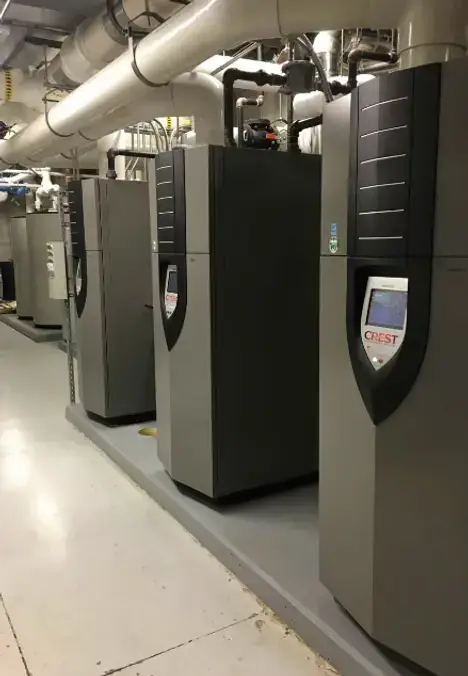
Commercial water heater installation — domestic hot water systems for restrooms, commercial kitchens, laundry, and similar applications — is plumbing work under Chapter 18.106 RCW and requires both a plumbing permit and a licensed plumbing contractor. Elite installs commercial tank-type water heaters, heat pump water heaters, and Intellihot commercial tankless water heating systems under our Intellihot IntelliPRO certification. Intellihot units generate hot water on demand through a continuous-flow heat exchanger — no storage tank, no standby losses, essentially unlimited output capacity. For commercial facilities with high simultaneous domestic hot water demand — hotels, healthcare facilities, multi-unit residential, and food service operations — proper system sizing requires calculating the peak simultaneous demand rather than applying a rule of thumb based on building size. Elite sizes commercial water heating systems based on fixture unit loads and usage profiles, and designs recirculation loops to maintain temperature at the point of use without wasting energy through excessive pump runtime.
Gas Piping for Commercial Applications
Commercial gas piping — from the service meter to boilers, water heaters, commercial cooking equipment, laboratory equipment, and other gas-fired appliances — is within the plumbing contractor scope under WAC 51-56 and Chapter 18.106 RCW. Elite installs, modifies, and tests commercial gas piping systems including main gas lines, distribution piping to equipment, shut-off valve assemblies, and pressure testing to confirm leak-free installation before equipment connection. Gas piping modifications are required whenever new gas-fired equipment is added, existing equipment is relocated, or the building's gas demand changes enough to require resizing the supply piping. A gas supply line sized for the original building load may be inadequate for a tenant improvement that adds commercial cooking equipment — undersized gas piping reduces appliance performance and can cause ignition failures. We size gas piping to the total connected load and the specific pressure requirements of the equipment being served.
One Contractor. Every System. The Whole Region.
Before your next commercial plumbing project starts, verify your contractor holds a Licensed Plumbing Contractor license under Chapter 18.106 RCW — not just a GC registration. Elite holds Plumbing License ELITEMS761BC. This page covers Elite’s day-to-day plumbing work; for backflow testing and Elite’s full range of plumbing services, see our commercial Plumber page. Call (360) 489-0717 or fill out our online quote request form to discuss your project.
Commercial Plumbing Work Across Western Washington
Restaurants and Commercial Kitchens — Thurston and Pierce Counties
The restaurant and commercial kitchen market in Thurston and Pierce Counties generates a consistent volume of commercial plumbing work driven by two forces: new food service construction along the commercial corridors in Lacey, Olympia, Tumwater, Tacoma, and Puyallup, and ongoing FOG compliance requirements for existing operations. Commercial kitchens that were built without properly sized grease interceptors, or that have expanded their cooking equipment without updating their interceptor capacity, frequently receive compliance notices from the local sewer authority requiring corrective work. Elite installs grease interceptors for new construction and retrofit applications, sizes them correctly to the kitchen’s actual fixture load, and provides the documentation that local sewer authorities require for FOG compliance sign-off.
Healthcare Facilities — Multi-County
Healthcare plumbing — hospitals, outpatient surgery centers, dental and medical clinics, and residential care facilities — involves requirements beyond standard commercial plumbing code. Reduced pressure backflow assemblies are required at virtually every water service connection in healthcare settings due to the high-hazard classification of the cross-connections present. Recirculation systems must maintain domestic hot water temperatures above 120°F throughout the system to prevent Legionella growth under ASHRAE 188 guidelines. Medical gas piping — oxygen, nitrous oxide, medical air, and vacuum systems — requires a journey-level plumber with a medical gas piping installer endorsement (MG01) under Chapter 18.106 RCW. Elite holds the plumbing credentials for standard commercial healthcare plumbing scope. For medical gas piping specifically, we note the MG01 endorsement requirement and address it on a project-by-project basis.
Industrial and Tribal Facilities — Lewis, Cowlitz, and Mason Counties
Industrial facilities in Lewis and Cowlitz Counties — manufacturing operations, food processing, and the light industrial base along the I-5 corridor — generate commercial plumbing work that combines large-diameter process piping, high-demand water supply systems, and complex drain systems handling process waste rather than standard sanitary loads. Tribal facilities across Mason, Lewis, and Grays Harbor Counties present a distinct market: tribal housing authorities, community centers, tribal gaming and hospitality operations, and health clinic facilities that require a licensed commercial plumbing contractor but often have limited local access to credentialed providers. Elite holds the supplier diversity certifications — MWBE, DBE, PWSBE — that qualify us for tribal enterprise contracting frameworks, and we travel consistently to these markets as a standard part of our Western Washington service footprint.
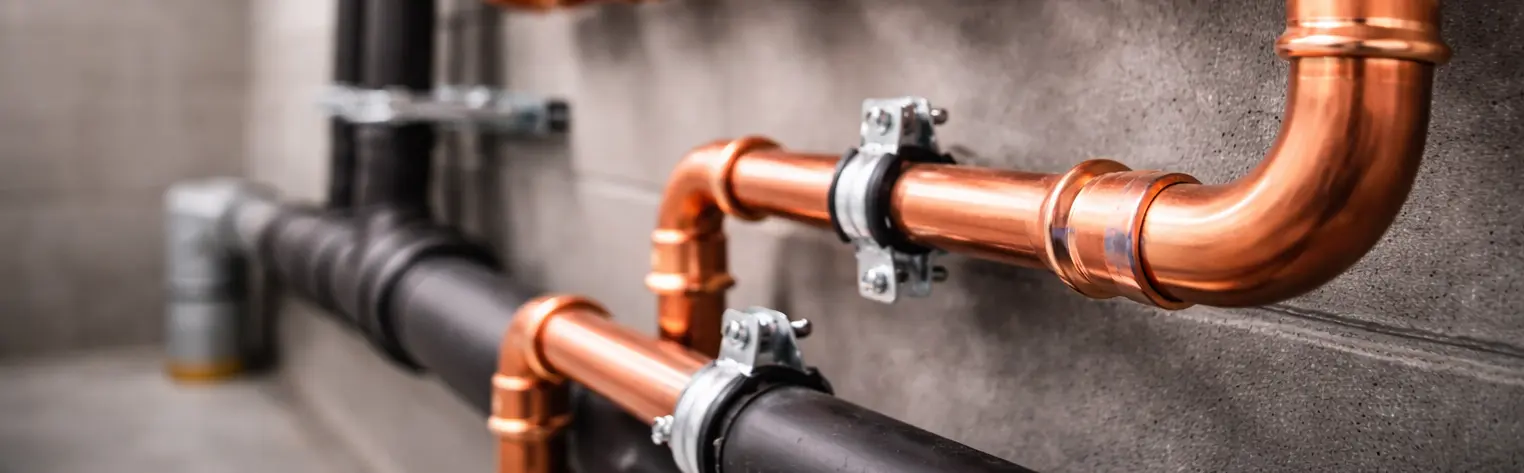
- Restaurants and commercial kitchens requiring grease interceptor installation and FOG compliance
- Hospitals and healthcare clinics with backflow prevention and recirculation compliance requirements
- Hotels and multi-unit residential buildings with high domestic hot water demand
- Schools and government buildings with aging water supply and DWV infrastructure
- Tribal facilities across Western Washington requiring licensed plumbing contractor credentials
- Office buildings and corporate campuses undergoing tenant improvement plumbing modifications
- Industrial facilities with process water supply and drain systems
- Retail build-outs requiring plumbing rough-in for restrooms and utility connections
- New commercial construction requiring complete plumbing system installation
- Facilities with backflow preventers requiring annual DOH-certified testing and compliance documentation
Commercial Facilities We Provide Plumbing Services For
Commercial plumbing work requires a contractor who understands both the technical scope and the regulatory framework — knowing what requires a permit, what requires a licensed BAT for backflow testing, and what requires documentation that the local water purveyor, sewer authority, or AHJ will actually accept. That’s the standard Elite holds on every commercial plumbing project.
We provide commercial plumbing services only — no residential service calls, no home repairs. The technical and licensing standards for commercial plumbing work are distinct from residential, and our team is trained and credentialed to the commercial standard exclusively.
Commercial Plumbing Service Area — Western Washington
Commercial plumbing permits in Western Washington are issued by local Authority Having Jurisdictions — city and county building departments — not by the state. Our service area of six counties encompasses numerous separate AHJs: the City of Lacey, City of Olympia, City of Tumwater, Thurston County, City of Tacoma, Pierce County, Lewis County, Cowlitz County, Mason County, and Grays Harbor County, each with their own permit processes, inspection schedules, and local amendments to the UPC under WAC 51-56. Elite navigates this multi-jurisdiction environment as a standard part of our commercial plumbing practice — we know which AHJ covers each project location, what their plan review requirements are, and how to schedule inspections within their timelines.
The highest concentration of our commercial plumbing work is in Thurston and Pierce Counties — the school district capital improvement market, the commercial kitchen and restaurant build-out market in Lacey and Olympia, the healthcare facility plumbing work in Tacoma’s medical campus concentration, and the tenant improvement market serving the active commercial construction corridor from Tumwater north through the Hawks Prairie area. These markets generate plumbing work across all project types: new construction rough-in, tenant improvement modifications, grease interceptor installation and compliance, backflow preventer testing programs, and commercial water heater replacement.
Lewis and Cowlitz County commercial plumbing work covers the I-5 commercial corridor from Centralia through Chehalis into the Longview and Kelso market. Industrial facility plumbing, food service and hospitality plumbing, and public sector building plumbing in this corridor represent a market with limited credentialed commercial plumbing contractor access compared to the Thurston and Pierce County core. Mason and Grays Harbor Counties add tribal facility work, healthcare clinic plumbing, and the coastal commercial market in Aberdeen and Hoquiam to our service footprint.
Review our complete service area across Western Washington, or call (360) 489-0717 to discuss your facility’s location and plumbing project scope.
Why Choose Elite for Commercial Plumbing Services
The most important verification you can make before hiring a commercial plumbing contractor in Washington state is simple: does the contractor hold a Plumbing Contractor License under Chapter 18.106 RCW, or only a general contractor registration? Since July 1, 2021, only the former is legally authorized for plumbing contract work. Elite holds Plumbing Contractor License ELITEMS761BC — verifiable through Washington State L&I — with a designated journey-level plumber covering the full commercial and industrial plumbing scope. That’s the starting point. From there, the combination of GC License ELITEMS796R2, Electrical License ELITEMS787CH, and our mechanical and water heating credentials means Elite can manage a complete commercial plumbing project — including the connections to boilers, water heaters, and building automation controls — without breaking scope across multiple contractors.
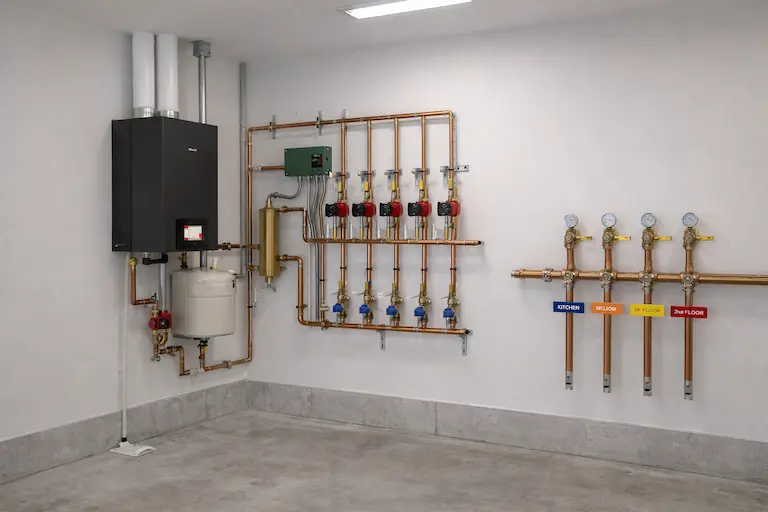
- Plumbing Contractor License: ELITEMS761BC — the license Chapter 18.106 RCW requires for all plumbing contract work in Washington state
- Intellihot IntelliPRO Contractor — certified for Intellihot commercial tankless water heating system installation
- GC License: ELITEMS796R2 — full mechanical scope under one licensed contractor
- Electrical License: ELITEMS787CH — controls, water heater electrical, and associated wiring in-house
- Seattle Grade III Boiler Supervisor | Boiler License #LIC-BO-1670 — hydronic piping connected to boiler systems
- Union contractor — union-trained journey-level plumbers on every commercial project
- EPA Section 608 certified — refrigerant-adjacent plumbing connections handled correctly
- MWBE Cert #M1F0027854 | DBE Cert #D1F0027854 | PWSBE Cert #P000027854
- Bond capacity: $750,000 single project | $1.2 million aggregate
- Founded 2021 | Minority-owned, woman-owned, Indigenous-owned, Latino-owned
Commercial plumbing failures — a blocked grease drain during a dinner service, a backflow preventer that fails compliance inspection, a water supply leak behind a finished wall — are expensive, disruptive, and almost always preventable. The difference is a contractor who pulls permits, uses licensed journey-level plumbers, and documents the work. Elite does all three on every project, in every county in our service area.
What plumbing license does Elite hold for commercial plumbing work in Washington state?
Elite Mechanical Services holds Plumbing Contractor License ELITEMS761BC under Chapter 18.106 RCW — the license Washington state requires for all plumbing contract work. This is distinct from a general contractor registration. As of July 1, 2021, Washington eliminated the specialty plumbing registration that previously allowed GCs to perform plumbing work. Since that date, plumbing contract work requires a Licensed Plumbing Contractor with a designated journey-level or specialty plumber on staff. Elite's designated plumber holds a journey-level certificate (PL01) covering the full commercial and industrial plumbing scope. You can verify any Washington plumbing contractor license through the L&I contractor license lookup at lni.wa.gov.
Does Elite install grease interceptors for restaurants and commercial kitchens?
Yes. Elite installs grease interceptors for new commercial kitchen construction and retrofit applications throughout Western Washington. Grease interceptors are required by local sewer authorities for food service operations under FOG (fats, oils, and grease) programs. Sizing is based on the kitchen's grease-generating fixture load — an undersized interceptor fails compliance inspections and may require replacement. Elite sizes interceptors to the UPC fixture unit calculation for the specific kitchen layout, installs them per the local sewer authority's specifications, and provides the installation documentation the FOG program requires. We also work with facilities that have received compliance notices and need corrective installation.
What is the Washington Plumbing Code and how does it apply to commercial plumbing projects?
The Washington State Plumbing Code is codified under WAC 51-56, which adopts the Uniform Plumbing Code (UPC) published by IAPMO with Washington-specific amendments. It governs potable water supply systems, drain-waste-vent systems, backflow prevention, storm drainage, gas piping, and commercial water heater installations in all buildings subject to the Washington State Building Code. For commercial plumbing projects, WAC 51-56 establishes the minimum standards for pipe sizing, fixture unit calculations, venting requirements, materials specifications, and backflow prevention device selection. Local jurisdictions — cities and counties — may adopt amendments that are more restrictive than the state minimum under RCW 19.27. Elite tracks the local amendments adopted by each AHJ in our service area and applies the correct standard for each project location. Information on cross-connection control and backflow prevention requirements under WAC 51-56 and WAC 246-290-490 is available from the Washington State Department of Health at doh.wa.gov.
How often do commercial backflow preventers need to be tested in Washington state?
Under WAC 246-290-490 and the Washington Plumbing Code (WAC 51-56-0600), backflow prevention assemblies must be tested at installation, after any repair or relocation, and at least annually. Testing must be performed by a Washington State Department of Health certified Backflow Assembly Tester (BAT). Test reports must be submitted to the local water purveyor. Non-compliance can result in water service shutoff. Elite coordinates annual backflow testing programs for commercial clients — scheduling the test, generating the required documentation, and submitting it to the water purveyor so the facility stays in compliance without having to manage the process independently.
Can Elite install commercial water heaters as part of a plumbing project?
Yes. Commercial water heater installation is plumbing work under Chapter 18.106 RCW and requires a licensed plumbing contractor and a plumbing permit. Elite installs commercial tank-type water heaters, heat pump water heaters, and Intellihot commercial tankless water heating systems. Intellihot installations are covered under our Intellihot IntelliPRO contractor certification, which covers system configuration, cascade sequencing for multi-unit installations, recirculation loop design, and gas line sizing. All water heater installations include the required plumbing permit and inspection. Note: Intellihot units are commercial water heaters, not boilers — they are not subject to Washington state's boiler permit and inspection requirements under WAC 296-102.
Commercial Mechanical Contractor | Lacey, WA | Founded 2021
Frequently Asked Questions
Licensed. Permitted. Inspected. That's the Standard for Commercial Plumbing.
Elite Mechanical Services provides commercial plumbing for new construction, tenant improvements, renovations, backflow testing programs, grease interceptor installation, and commercial water heater projects across Lacey, Olympia, Tumwater, Tacoma, and Western Washington. Plumbing Contractor License ELITEMS761BC. Journey-level plumbers. Permitted work. Call (360) 489-0717, email admin@elitemechsvcs.com, or fill out our online quote request form.